Skellig Michael
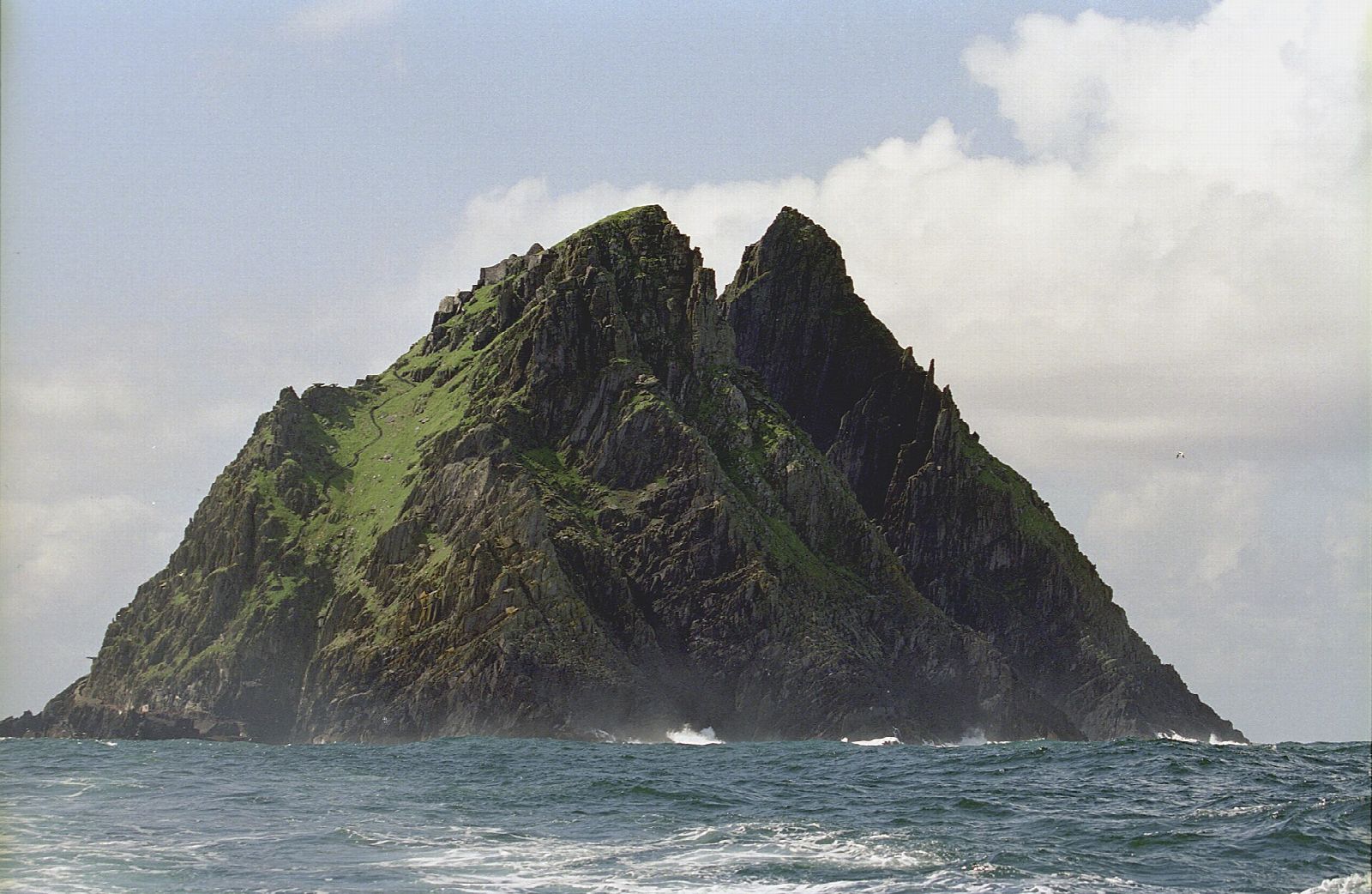
A jagged pinnacle of rock rising sheer from the Atlantic some twelve kilometres off the Iveragh coast, Skellig Michael holds one of Europe's best-preserved early-Christian monasteries - beehive cells clinging to a ledge six hundred steps above the sea. A UNESCO World Heritage Site and, more recently, Luke Skywalker's island refuge, it is Kerry's most extraordinary and hardest-won destination.
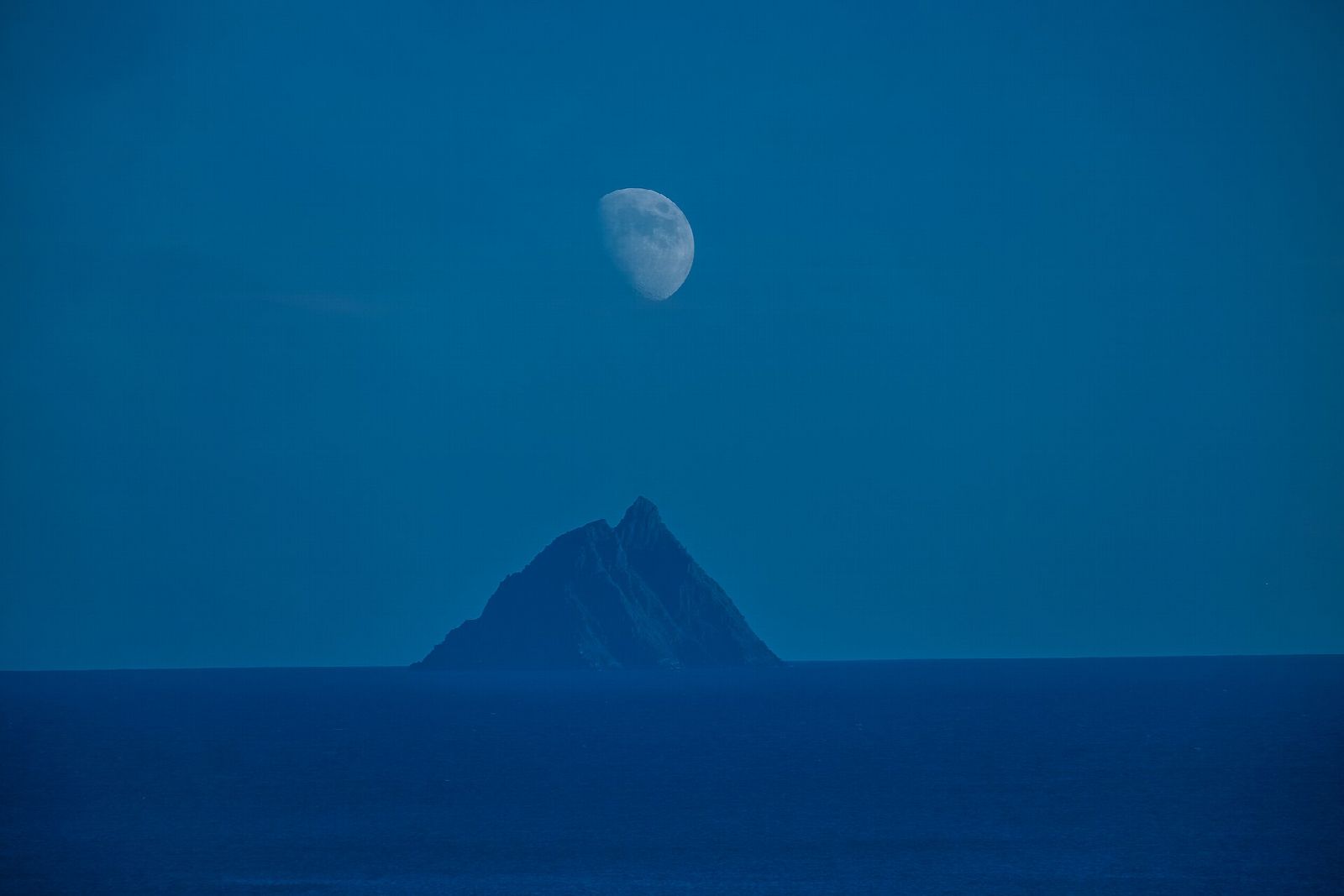
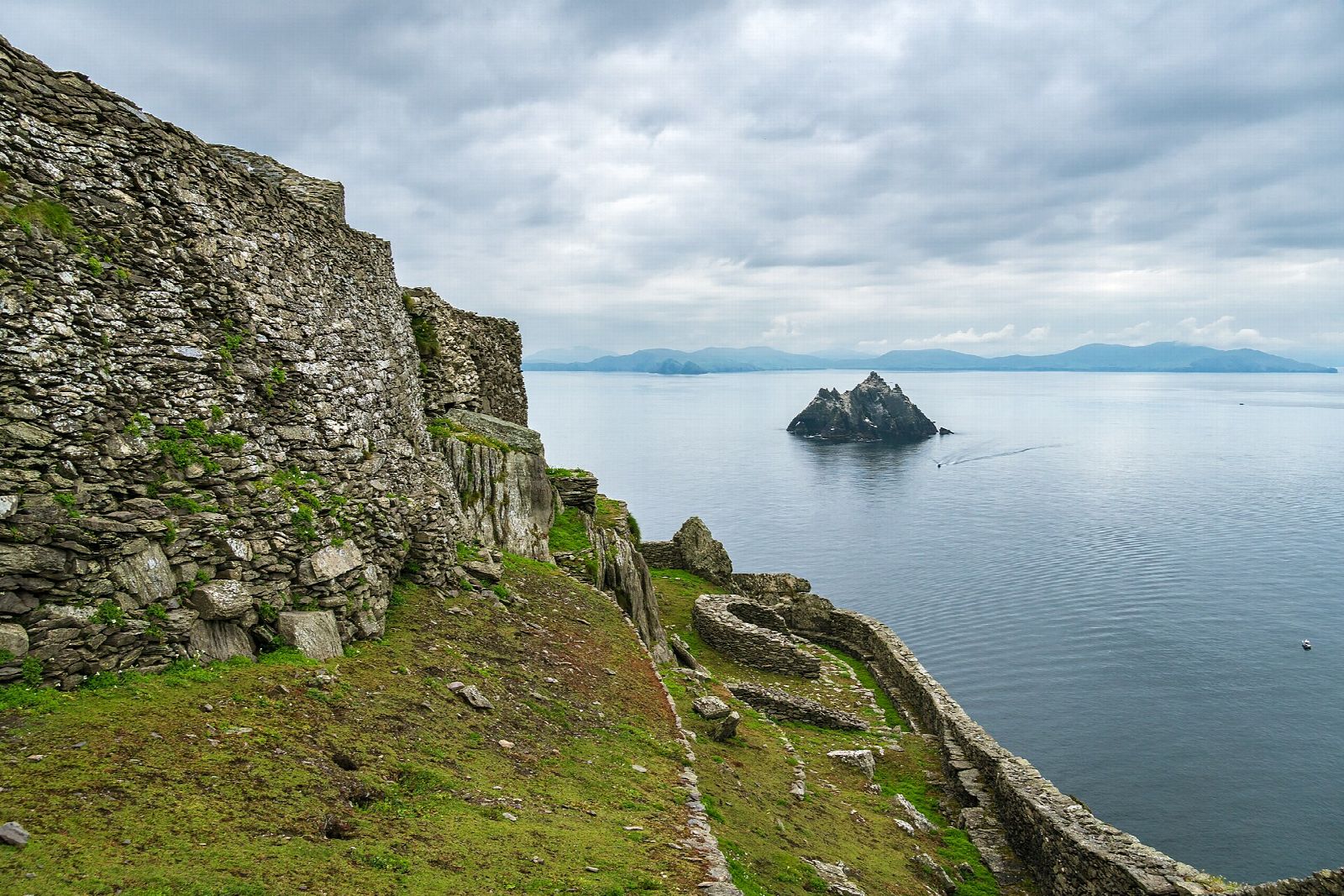
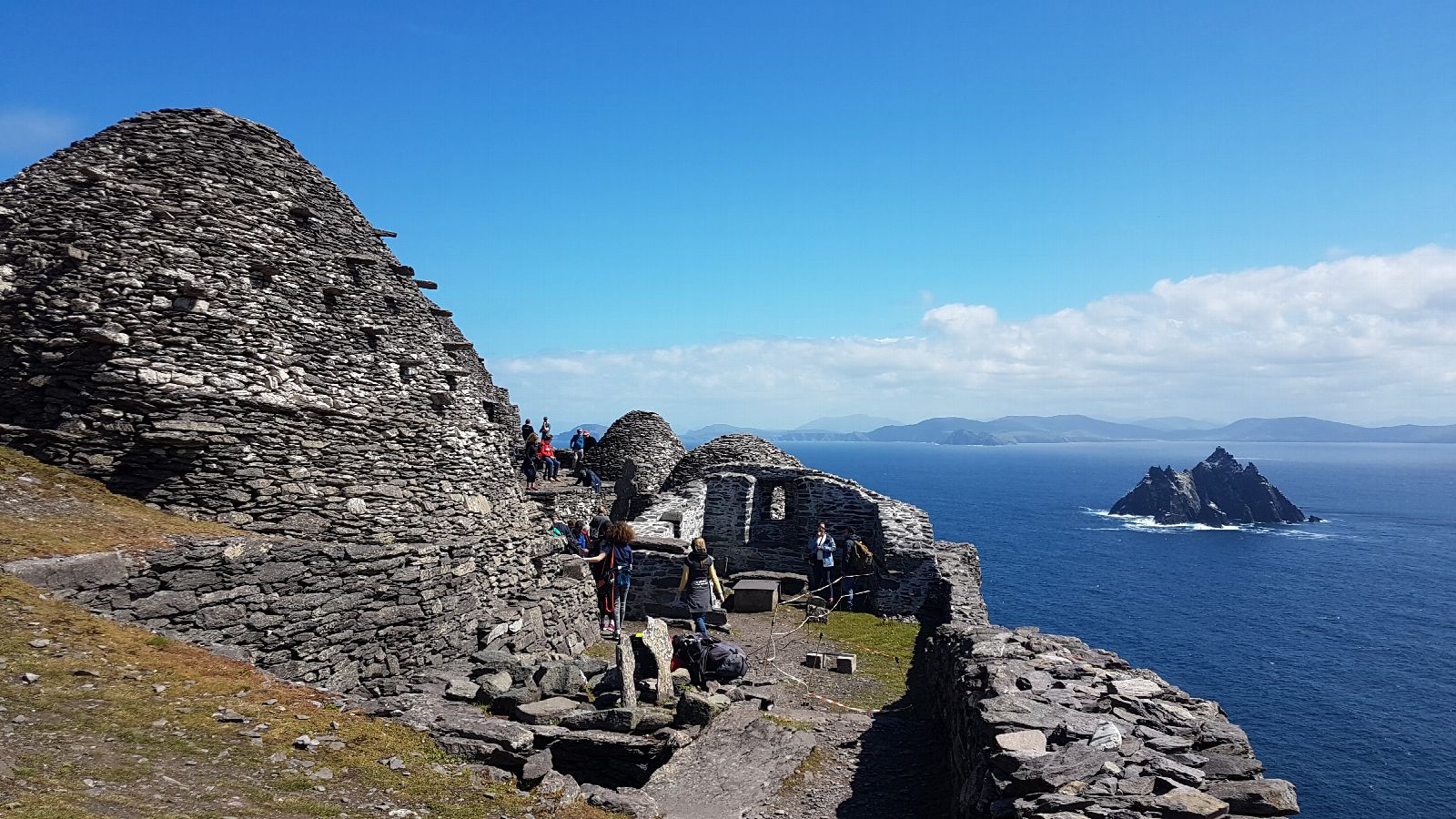
Twelve kilometres out from the harbour at Portmagee, two rocks break the Atlantic swell: Little Skellig, white with gannets, and beyond it the greater peak of Skellig Michael, rising more than two hundred metres straight from the water. Sometime between the sixth and eighth centuries - tradition credits followers of St Fionán - a community of monks chose this improbable place to build a hermitage as close to heaven and as far from the world as they could manage. What they left behind, huddled on a terrace near the summit, is one of the most complete early-monastic sites in western Europe: a cluster of drystone beehive huts, two boat-shaped oratories, a small church and a scatter of carved cross-slabs, all raised without mortar and still standing after more than a thousand winters.
Quite how a dozen or so men survived out here - fishing, tending tiny terraced plots, gathering rainwater in stone basins, cut off by the sea for weeks at a stretch - is only half understood. The monks endured Viking raids in the ninth century and finally abandoned the rock around the twelfth or thirteenth, after which it became a place of hard pilgrimage. For most of the modern era it was known only to seabirds, lighthouse keepers and a trickle of the devout - until 2014, when a film crew arrived and turned the island into Ahch-To, the wave-lashed refuge where Luke Skywalker hides at the end of the galaxy. Its appearances in The Force Awakens and The Last Jedi brought a new kind of pilgrim, though the climb has humbled Jedi and Christian alike.
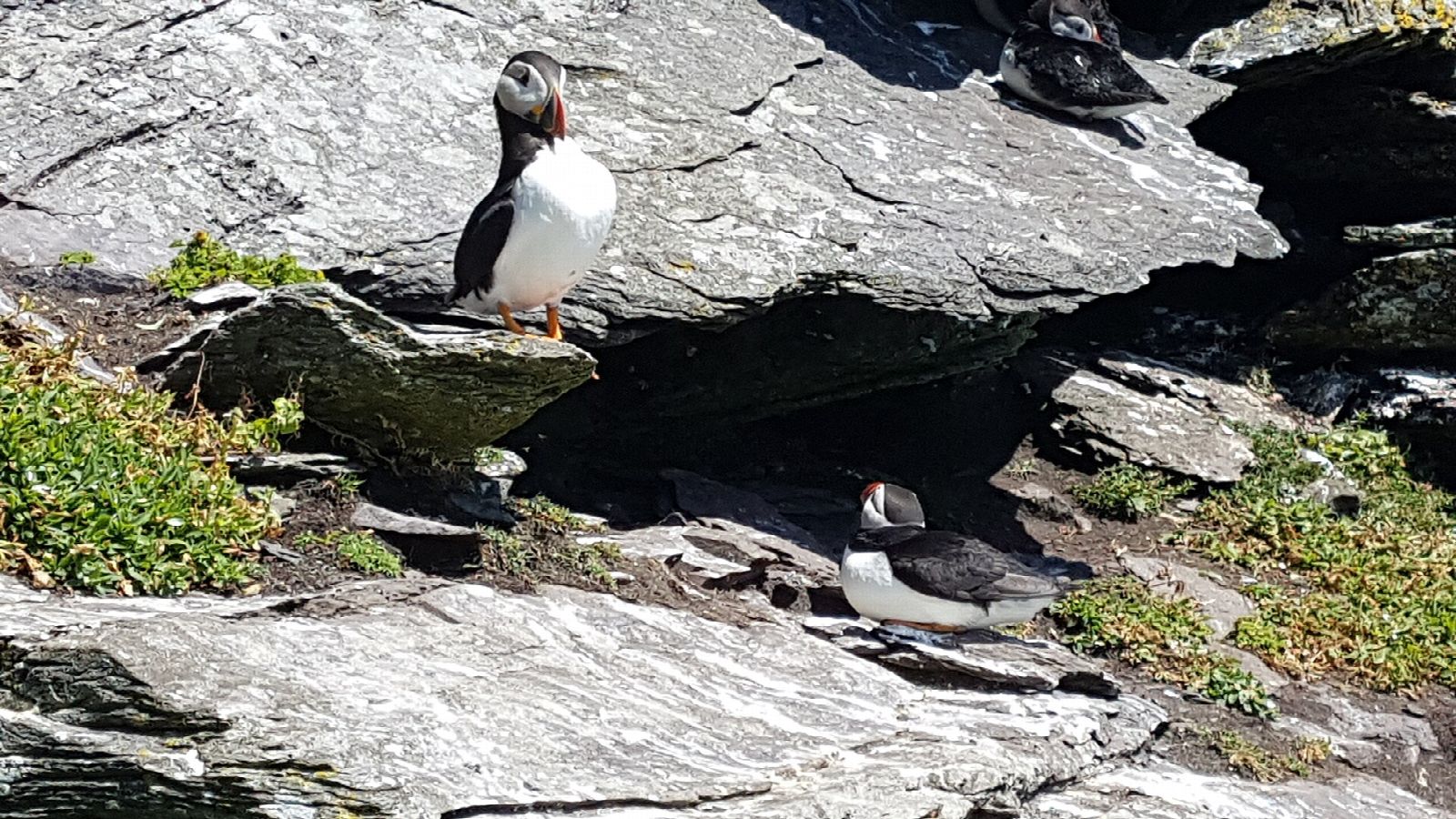
And it is a climb. Landing on the island means stepping from a small boat onto slick rock, then ascending roughly six hundred uneven, unguarded stone steps that the monks themselves cut into the cliff. There are no railings, no café, no shelter - only the steps, the wind, and a drop that concentrates the mind. On a fine day the rock hums with birdsong and the sea glitters far below; on a bad one the same steps stream with rain and the summit disappears into cloud. Those who make it are rewarded at Christ's Saddle and the monastery above with beehive cells you can duck inside, views back across the Atlantic to the mainland peaks, and, in early summer, puffins nesting almost underfoot. Higher still, a second and even more vertiginous hermitage reputedly clings to the South Peak, reached by a route now closed to visitors. The island itself charges no admission; what you pay for is the crossing and the privilege of a permit.
Getting there is the hard part. Only a handful of licensed operators may land passengers, the total is capped at a few hundred visitors a day, and the season runs roughly mid-May to late September, weather permitting - and the Atlantic frequently does not permit, cancelling sailings even in high summer. Landing tours sell out months in advance, so book early or not at all. If you can't secure a landing - or don't fancy the steps - eco-cruises circle both islands without going ashore, passing close under Little Skellig's roaring gannet colony. Either way the boats leave from Portmagee, with a few sailings from Valentia Island and further down the coast. Sturdy shoes are essential, the crossing is not for very young children, and even landward the best mainland view of the Skelligs is from the nearby Kerry Cliffs.
Photos