Muckross Abbey
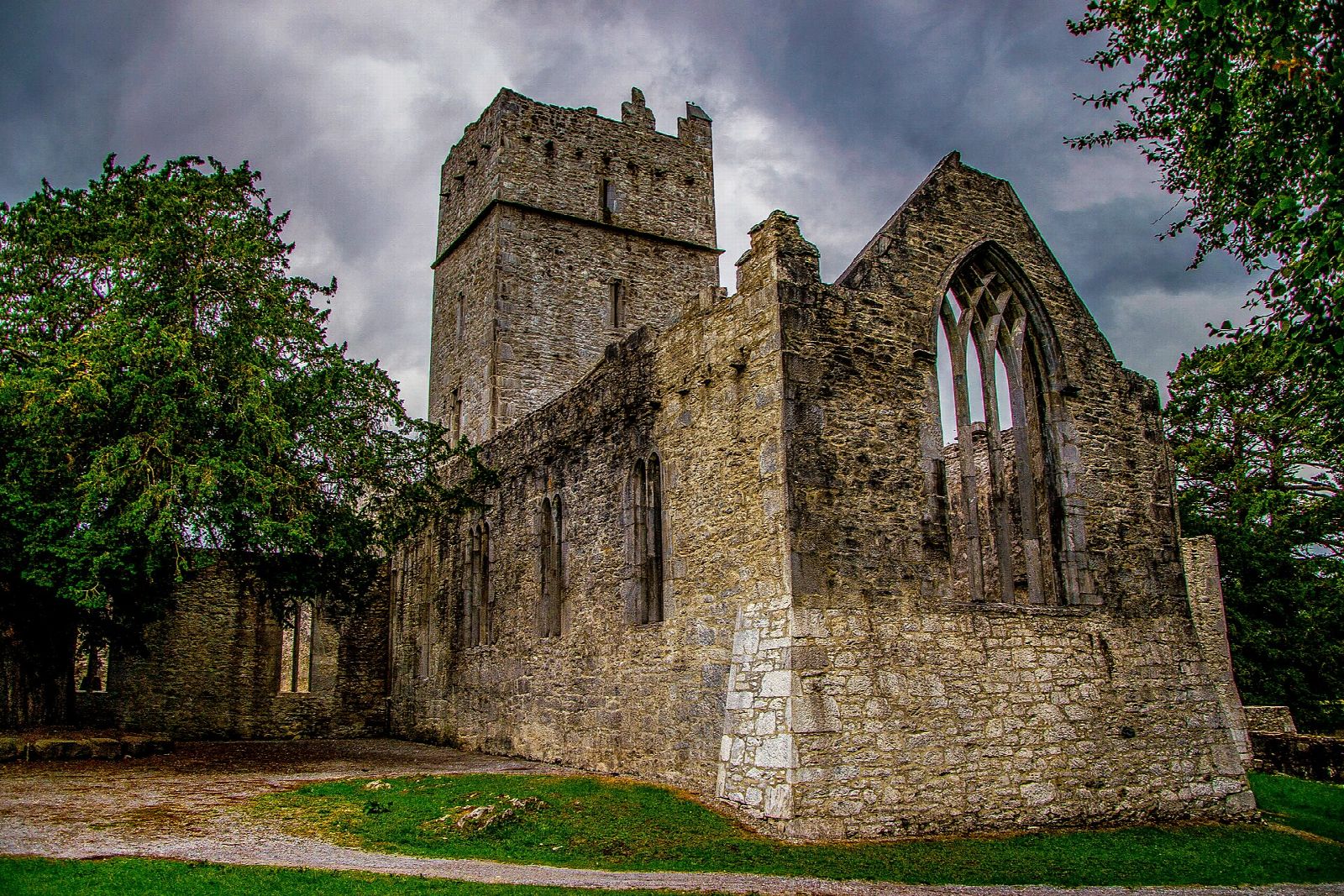
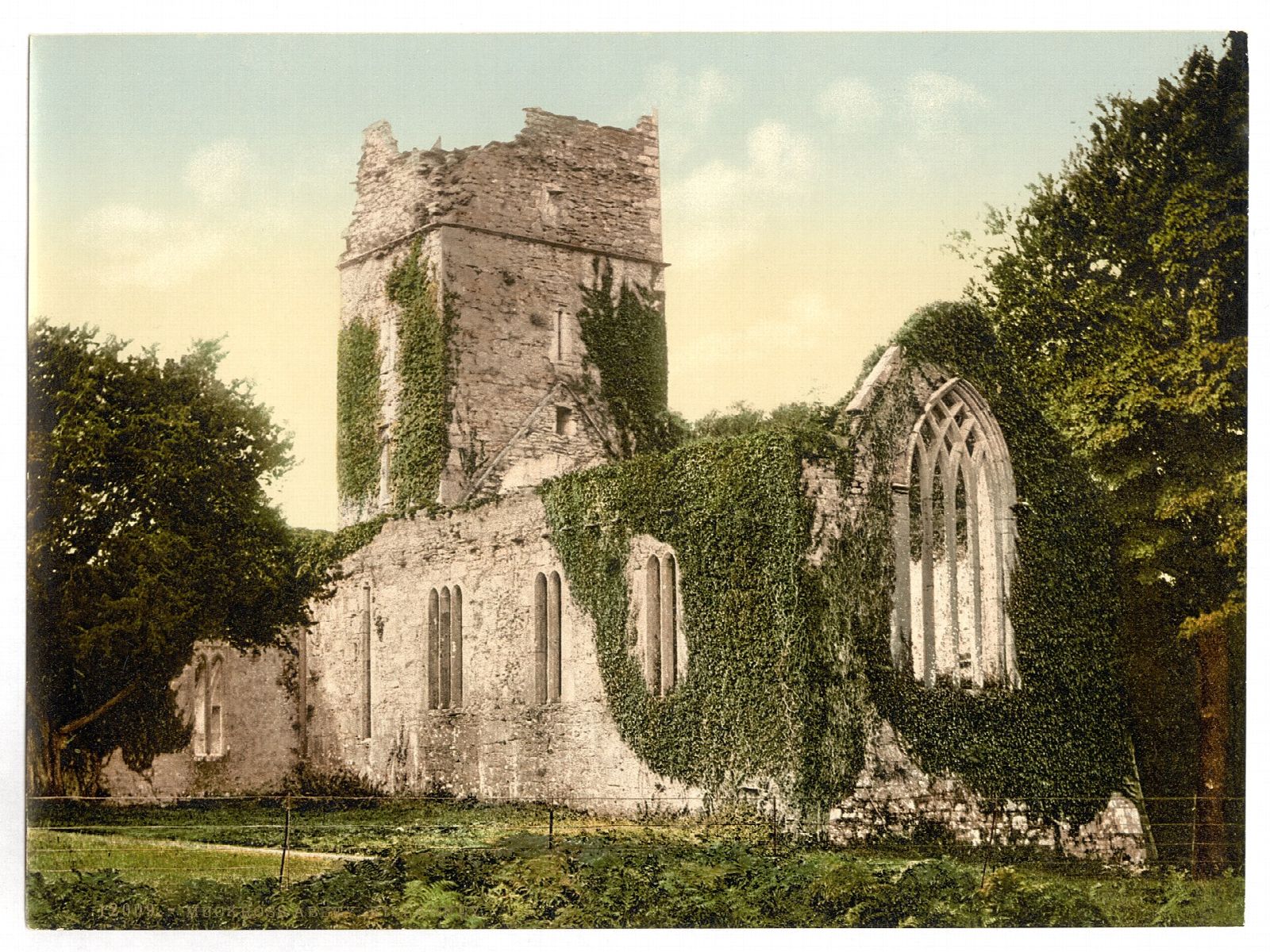
A remarkably well-preserved ruin in Killarney National Park, Muckross Abbey was a Franciscan friary founded in 1448 and burned out by Cromwell's soldiers two centuries later. Its great treasure is a vaulted cloister wrapped around an ancient yew tree, and its graveyard holds some of the last great poets of Gaelic Ireland. Free to wander, it is at its most haunting in the half-light.
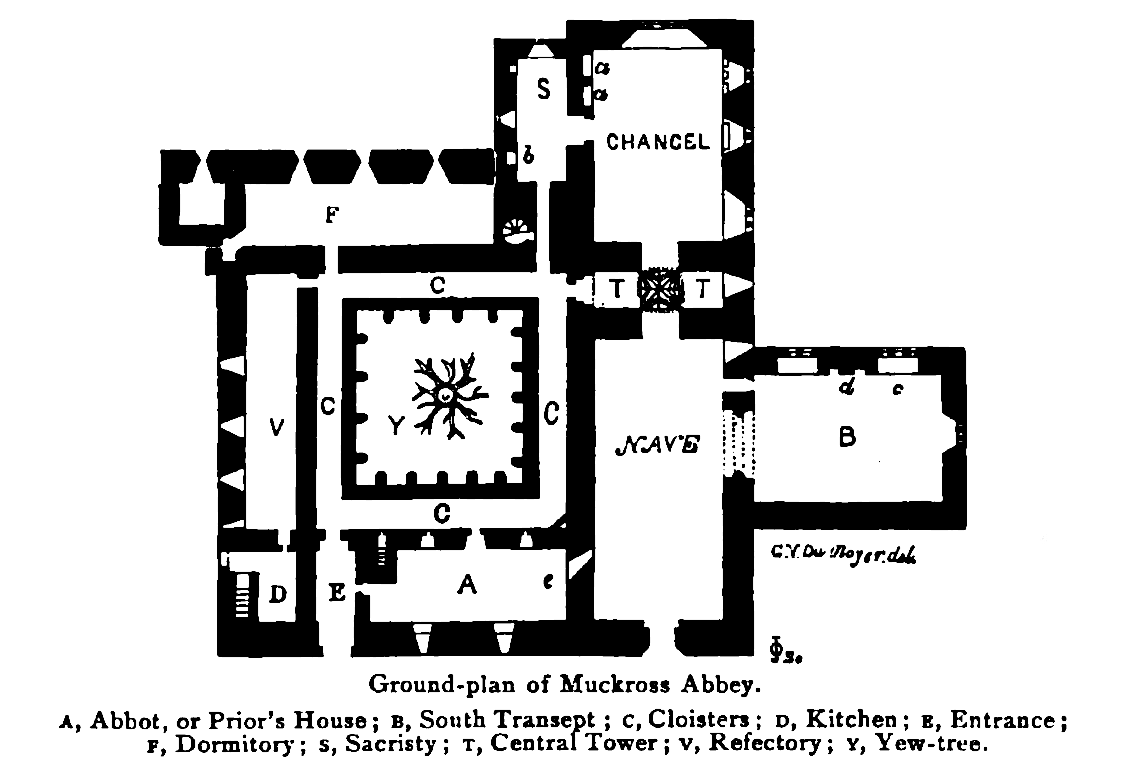
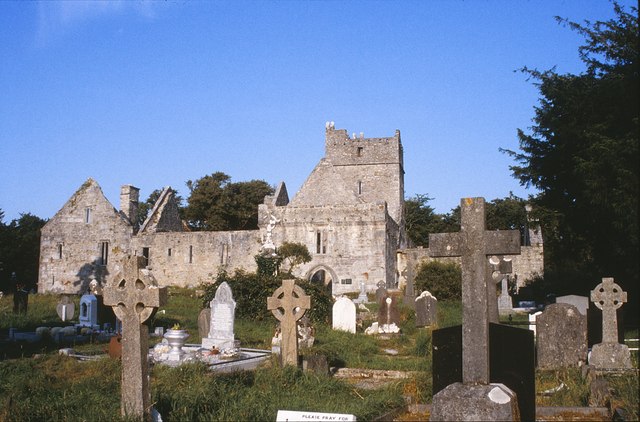
A short walk through the woods from Muckross House, on the shore of Lough Leane in Killarney National Park, stand the roofless walls of Muckross Abbey. It was founded around 1448 as a friary for the Observantine Franciscans, under the patronage of the Gaelic chieftain Donal McCarthy Mór, and originally went by the name Irrelagh. For all that it has stood open to the Kerry weather for centuries, it is astonishingly complete - nave, chancel, tower and cloister all still legible.
At the very heart of the building, enclosed on all four sides by the vaulted cloister, grows a great yew tree, so central to the place that people have long argued over whether the friars planted it or built the abbey around it. The abbey's later history was harder. It was attacked during the Elizabethan wars and, in 1652, Cromwell's forces stripped off the roof to render it useless; friars were killed and the survivors scattered, some as far as France.
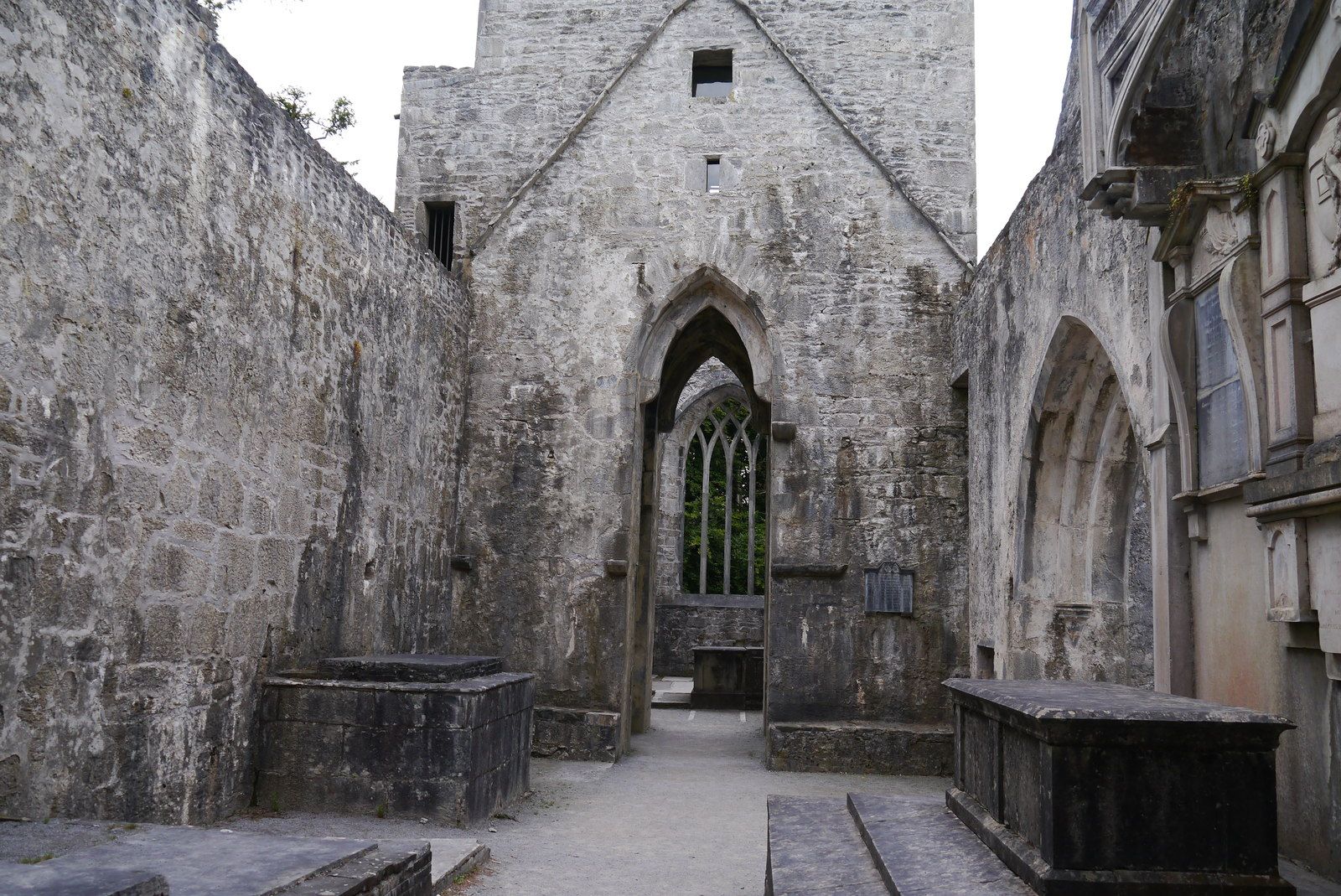
What draws many visitors is the graveyard. From the seventeenth and eighteenth centuries the abbey became the resting place of Kerry chieftains and, most famously, of the last great poets of the old Gaelic order - Aodhagán Ó Rathaille and Eoghan Rua Ó Súilleabháin among them. You can wander the ground floor freely and climb worn stairs to the old domestic rooms above, the dormitory and refectory where the friars once lived. Local lore warns, only half in jest, that ill luck follows anyone who harms the yew. Read the full history of Muckross Abbey, from the friars of 1448 to the burial customs and the ghosts.
The abbey lies within an easy stroll of the Muckross House car park, and it can also be reached on foot or by bike along the park's lakeside paths. There is no charge and no set opening hours - it is simply there, open to the walker. Allow half an hour or so at the ruin itself, longer for the woodland loop, and go early or late if you can: it is at its most memorable when the crowds have gone and the light is low. The floors are uneven and the stairs steep, so sturdy footwear helps.
Photos