Muckross House & Gardens
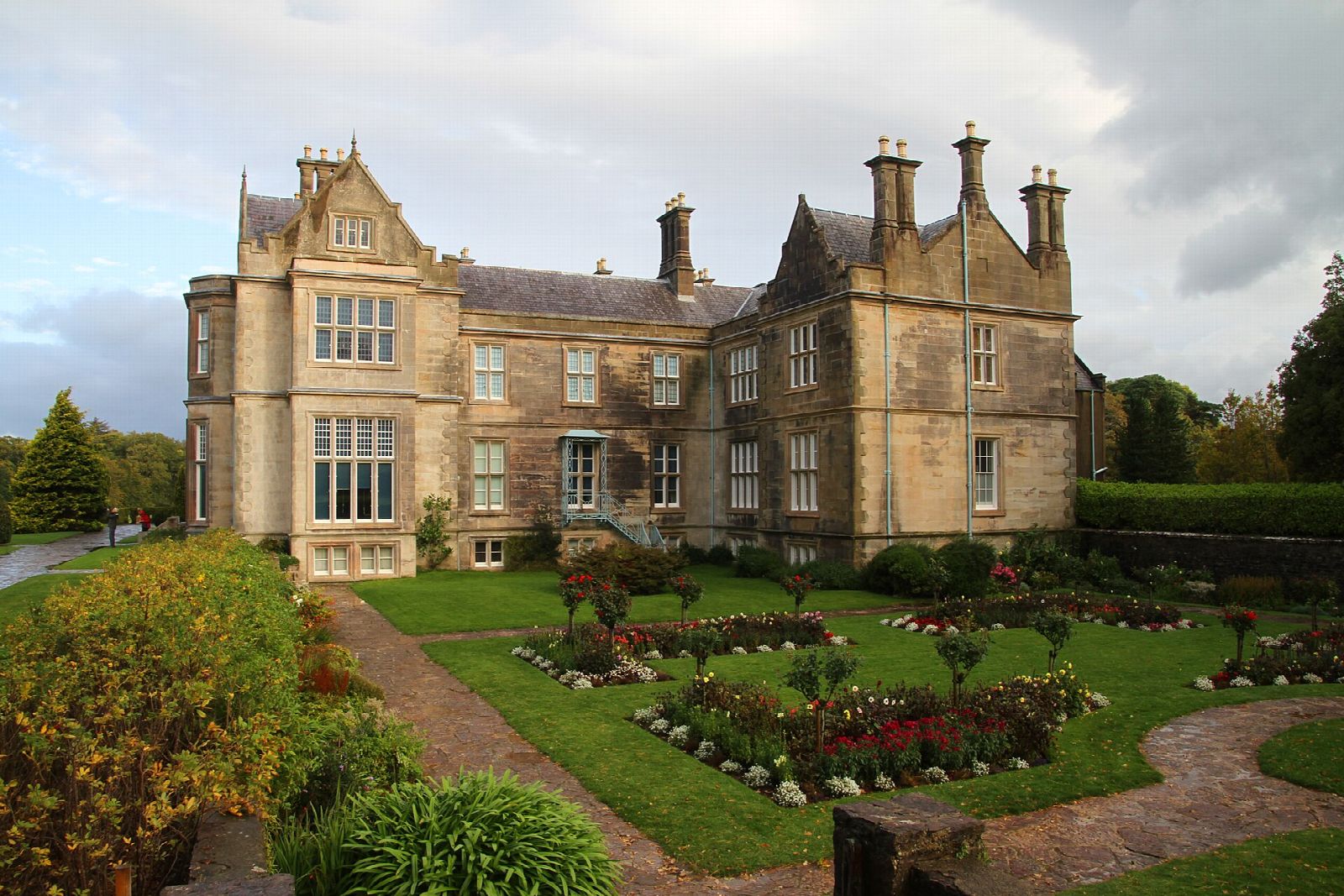
One of Ireland's great Victorian houses, Muckross stands amid lakeside gardens on a wooded peninsula in Killarney National Park. Built to impress - and nearly ruining its owners in the process - it was gifted to the nation in 1932, creating Ireland's first national park. Today its furnished rooms, working craft studios and traditional farms recreate life on a grand Kerry estate.
Set on a wooded peninsula between Muckross Lake and Lough Leane, a few miles south of Killarney town, Muckross House is the centrepiece of Killarney National Park - and, in a sense, the reason the park exists at all. The 65-room Tudor-Revival mansion was completed in 1843 for the local MP Henry Arthur Herbert and his wife, the watercolourist Mary Balfour Herbert, to a design by the Scottish architect William Burn. Less a single attraction than a whole estate of them, it gathers a great house, celebrated gardens, working farms and craft studios onto one lakeshore - you could fill an hour here, or very easily a day.
The house is inseparable from a single royal visit. In 1861 the Herberts hosted Queen Victoria for two nights, having spent years and a great deal of money preparing for her. They lost Muckross all the same. The estate went to its creditors in 1898, was bought by Lord Ardilaun of the Guinness family in 1899 and sold on in 1911 to the American William Bowers Bourn, whose family gave the house and some 11,000 acres to the Irish state in 1932 - the gift that created Ireland's first national park. Read the full history of Muckross House and estate.
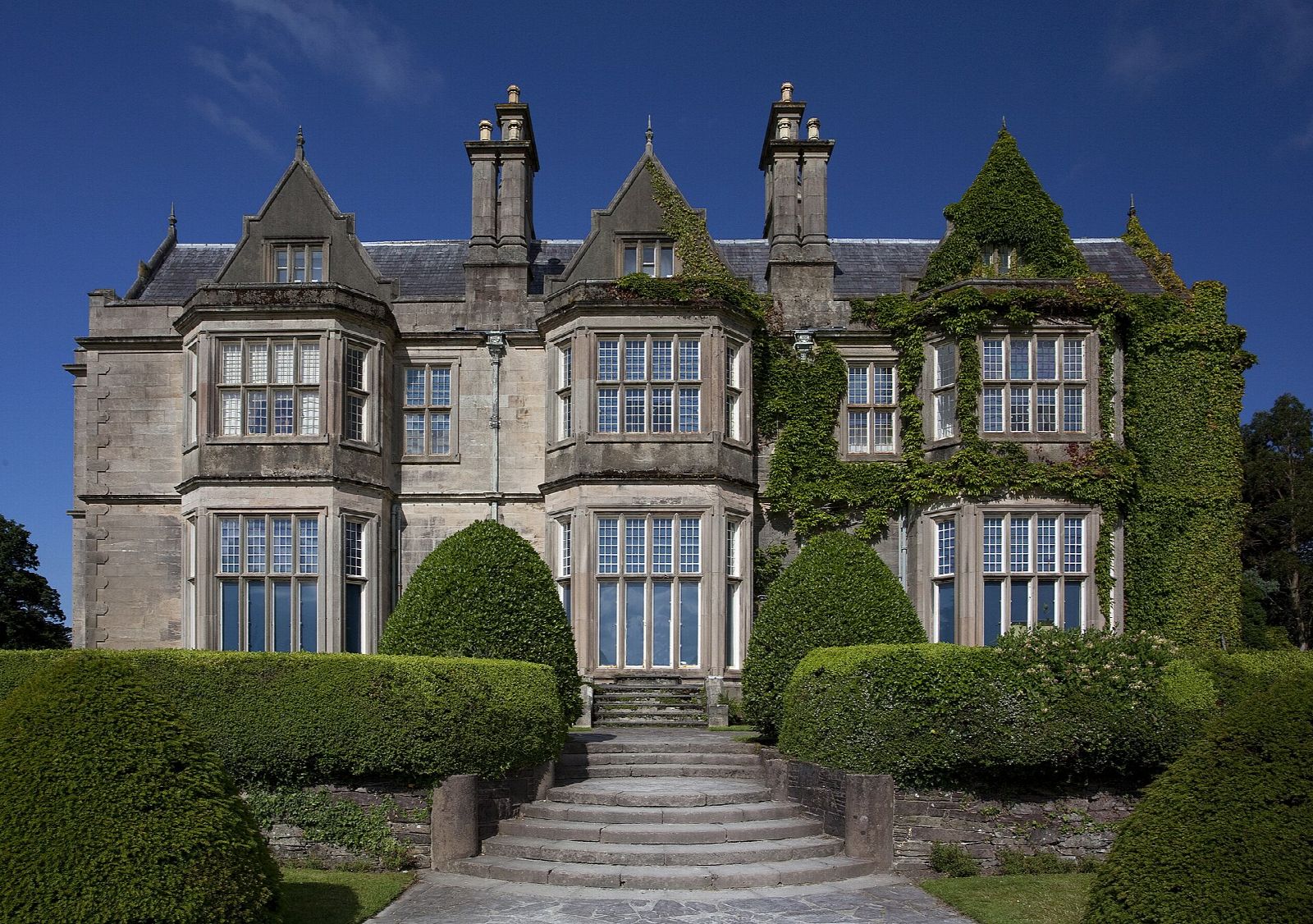
Inside, the guided tour moves through principal rooms furnished in period style - the drawing rooms, the library, the panelled dining hall, and the rooms done up for Victoria's stay - before dropping into the basement warren of kitchens and servants' quarters, which conjures the small army it took to run a Victorian estate.
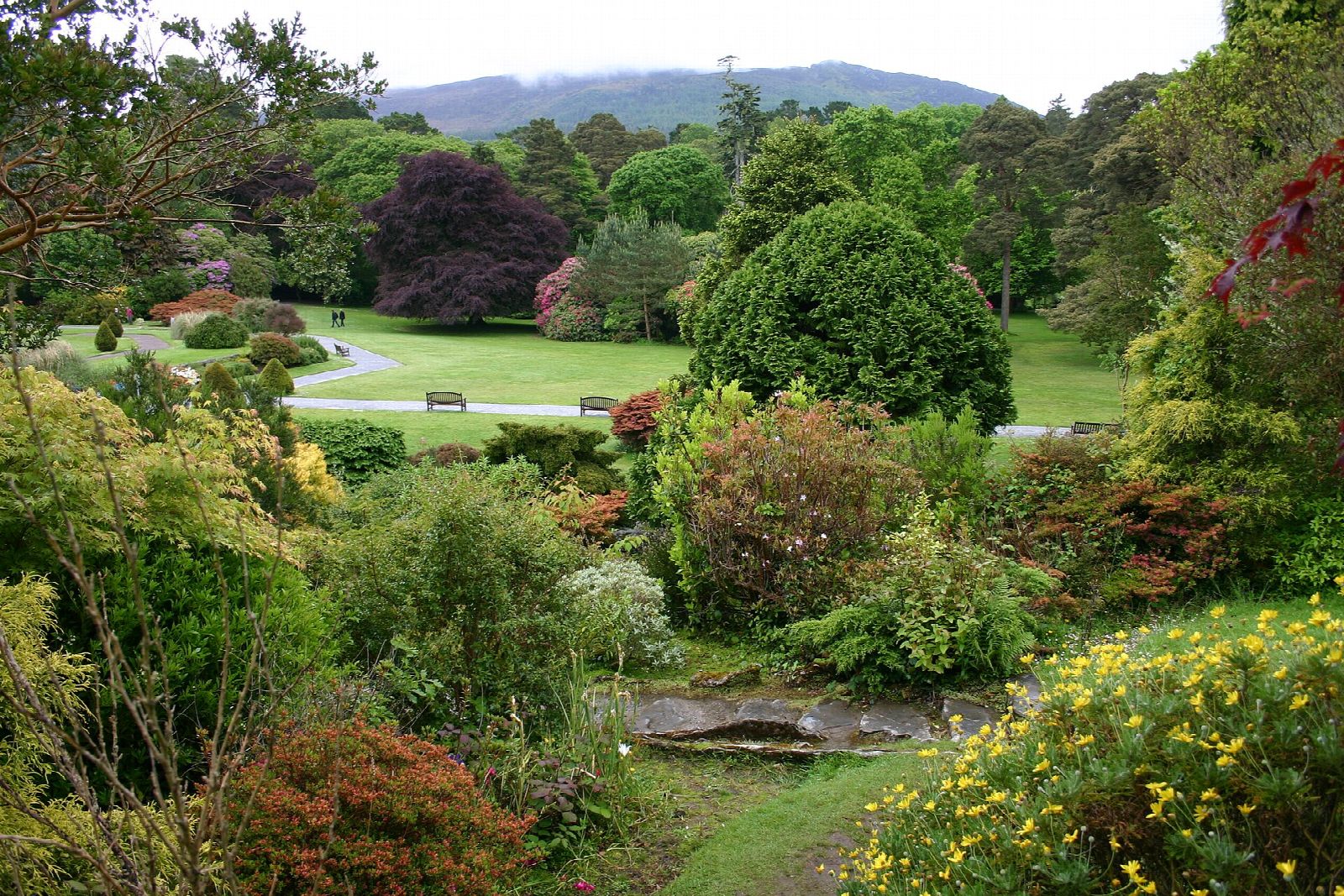
The gardens alone justify the trip. Broad lawns sweep from the house to the water's edge, and around them are gathered the Sunken Garden, glowing with formal bedding in summer; the Rock Garden, a natural limestone outcrop threaded with winding paths - a rockery on a scale no gardener could build; and the damp, ferny Stream Garden. Rhododendrons and azaleas set the grounds ablaze in May and June, while the arboretum behind stretches the show year-round with exotic trees from Chile, Tasmania and New Zealand. In the old Walled Garden, craft studios keep weaving and pottery alive, alongside a garden restaurant for lunch.
A short stroll away - or a ride on the vintage shuttle bus - the Muckross Traditional Farms recreate Kerry country life of the 1930s and 40s, in the last years before electricity reached the glens. Three working farms of ascending size, each with its furnished farmhouse, are joined by a labourer's cottage, a carpenter's workshop and a blacksmith's forge; Kerry cattle, draught horses, pigs and hens go about their business while bread bakes over the open hearth. Children tend to remember the farms long after the drawing rooms have blurred.
Then there are the lakes themselves. Muckross Lake and Lough Leane lap either side of the peninsula, and lakeshore paths run from the gardens in every direction: through the woods to the cloistered ruin of Muckross Abbey, down to the little swimming beach at Dundag Bay, or right around Muckross Lake on a ten-kilometre loop that crosses Brickeen Bridge to Dinis Cottage and the Meeting of the Waters, where the park's three lakes join. Jaunting cars wait near the gates for anyone who would rather clip along behind a pony, and the flat, traffic-free trails make this the best easy cycling in the park.
Muckross sits just off the N71 Kenmare road, with a large free car park, and the gardens and lakeshore are free to wander at any time; the house and farms are ticketed, with a combined ticket covering both. The house opens year-round from the morning, while the Traditional Farms run from mid-March to the end of October - allow around ninety minutes for the house and gardens, half a day with the farms, or a full day if you add the lake loop. Torc Waterfall is a few minutes further along the same road, on the same side of the lakes.
Photos
What's on here
All events →-
Aug
16
2027
Muckross Vintage Rally
Expected 16 August 2027The Killarney Valley Classic and Vintage Club fills Muckross Traditional Farms with classic cars, vintage tractors and working threshing displays for a Sunday in August.
-
Aug
17
2027
Heritage Week at Muckross
Expected 17-23 August 2027A different master craftsman at Muckross Traditional Farms every afternoon of Heritage Week, from basket making to blacksmithing, and all of it free.